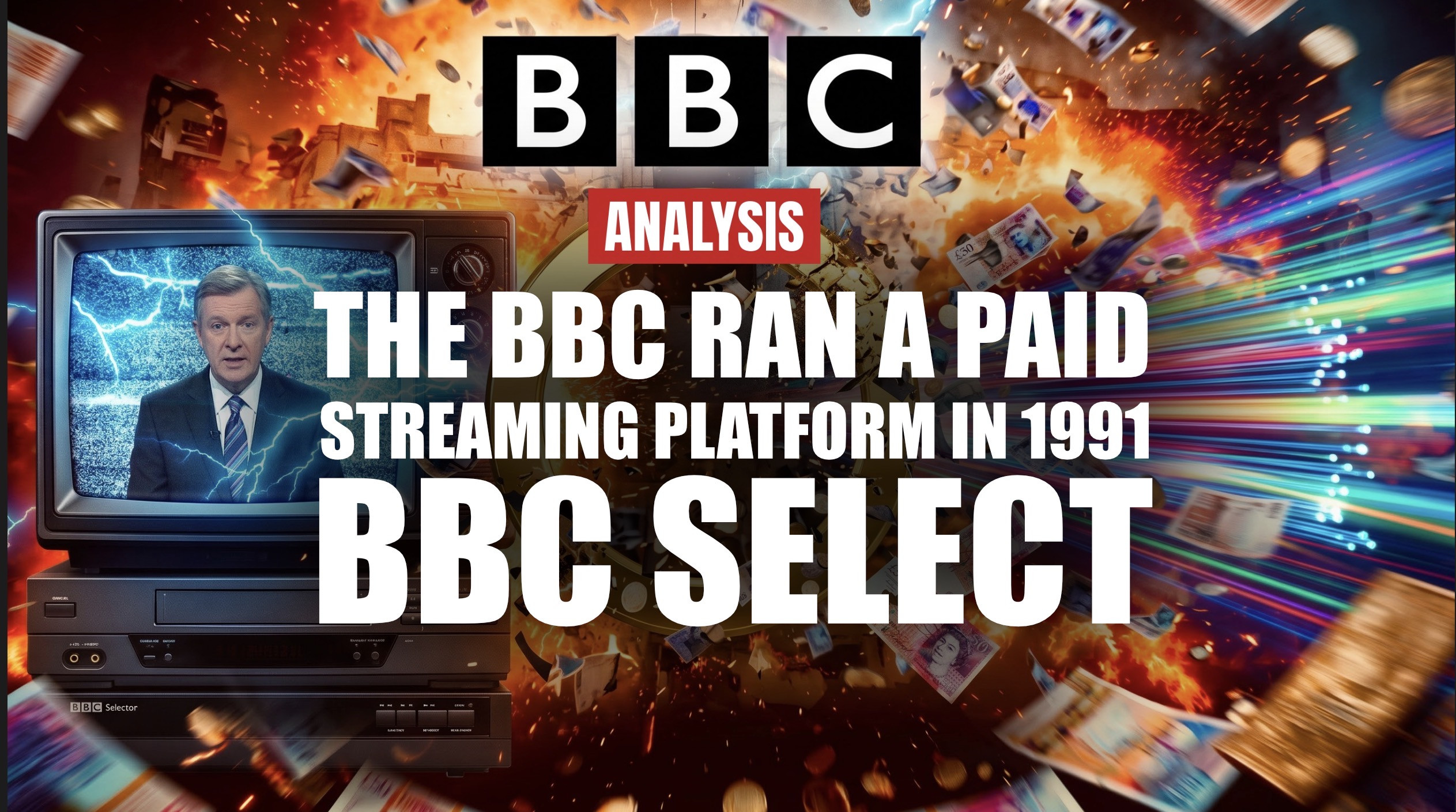
BBC SELECT : THE BBC RAN A PAID STREAMING PLATFORM IN 1991The BBC licence fee is once again in the spotlight, with intense debate surrounding new ways to fund the broadcaster in the digital age. 💷A suggestion that always comes up is to transition to a subscription model, allowing the BBC to compete directly on the open market alongside giants like Netflix and Prime. 🍿What most people don't realise is that the BBC already ran an experimental, paid for "streaming" service back in... Read more
BBC SELECT : THE BBC RAN A PAID STREAMING PLATFORM IN 1991
The BBC licence fee is once again in the spotlight, with intense debate surrounding new ways to fund the broadcaster in the digital age. 💷
A suggestion that always comes up is to transition to a subscription model, allowing the BBC to compete directly on the open market alongside giants like Netflix and Prime. 🍿
What most people don't realise is that the BBC already ran an experimental, paid for "streaming" service back in 1991. ⏪
Enter BBC Select. 🎬
Launched as an overnight service, BBC Select was a highly ambitious subscription model.
🌙 It broadcast between 2:00 AM and 6:00 AM when BBC1 and BBC2 were normally off air. To access it, subscribers needed a special set top decoder box (the "BBC Selector") to unscramble the VideoCrypt signal. 📟
Because it aired in the middle of the night, users would set their VHS recorders to capture the broadcast and watch it the next day, an analogue precursor to on demand streaming. 📼
Unlike today's broad entertainment platforms, BBC Select was strictly aimed at specialist professionals. 💼 The programming packages targeted specific niches, including accountants, lawyers, teachers, farmers, and nurses. 🧑🏫 Subscribers paid premium annual fees for these dedicated industry broadcasts. 📈
So, was it a success? 🤔
By all metrics, BBC Select was a spectacular failure. 📉 The service struggled to attract enough paying subscribers, lacked mainstream appeal, and was plagued by encryption issues. ⚠️
By the time the final encrypted broadcasts aired in late 1994, the experiment had lost the BBC an estimated £18 million. 💸 It was quietly shuttered and eventually replaced by free educational programming. 📚
While the 1991 experiment failed, the BBC has clearly dipped its toes into paid services before.
🌊 Today, with the massive success of the iPlayer and seamless broadband delivery, the technology exists to make a subscription model genuinely viable. 💻 The reasons for choosing not to would be based on other considerations such as disruption of the already struggling landscape, or believing it couldn’t attract enough willing subscribers.
There is plenty of room for optimism. ✨ While the clunky, niche approach of BBC Select (or BBC Choice) is clearly not the way the Corporation would ever consider selling subscriptions today, it remains an interesting and impressive bit of television history. 📺
What do you think? 🗣️ Should the BBC move to a modern subscription model, or is an unpopular universal tax is going to end up paying for public service broadcasting?
Let me know your thoughts in the comments! 👇